| |
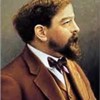
Claude Debussy
Romantic — Early 20th century
Claude Debussy was born in the Parisian suburb of Saint-Germaine-en-Laye on August 22, the eldest of five children. His father owned a china shop and his mother was a seamstress. The family moved to Paris in 1867. He took his first piano lessons when he was nine and in 1872 he entered the Paris Conservatoire
![[AjaxLoader]](/images/ajax-loader.gif)
-
Children's Corner, L.113
-
Classical Arrangements for Bass GuitarClaude Debussy, Georg Friedrich Händel, Ludwig van Beethoven, Edvard Grieg, Frédéric Chopin, Sergei Rachmaninoff, Pyotr Tchaikovsky
-
Classical Masterpieces for String Quartet, Album IVWolfgang Amadeus Mozart, Franz Schubert, Georges Bizet, Claude Debussy, Edvard Grieg, Pyotr Tchaikovsky
-
Classics for Clarinet Quartet, Volume 2Joseph Haydn, Franz Schubert, Claude Debussy, Johannes Brahms, Felix Mendelssohn-Bartholdy, Robert Schumann, Edvard Grieg, Frédéric Chopin
-
Images
-
Set I, II, L.110 L.111
-
Set I, L.110
-
Set II, L.111
-
Set III, L.122
-
Set III, No.1 Gigues, L.122
-
Set III, No.2 Iberia, L.122
-
Set III, No.3 Rondes du printemps, L.122
-
Introduction and Rondo Capriccioso, Op.28Camille Saint-Saëns
-
L'enfant prodigue (The Prodigal Son), L.57
-
L'Isle Joyeuse, L.106
-
La belle au bois dormant, L.74
-
La boîte à joujoux (The Toybox), L.128
-
La cloche fêlée (The Broken Bell)
-
La damoiselle élue (The Blessed Damozel), L.62
-
La mer (The Sea), L.109
-
La Mort de Cordélia for organClaude Debussy, Robert Orledge
-
La Passion, extraite du Martyre de Saint Sébaistien for solo piano
-
La Passion, from Le Martyr de St. Sébastien for orchestraClaude Debussy, Robert Orledge
-
La plus que lente, L.121
-
La Saulaie for baritone and orchestraClaude Debussy, Robert Orledge
-
Le Faune
-
Le Martyre de Saint Sébastien, L.124
-
Le petit nègre (The Little Negro), L.114
-
Le Promenoir des deux amants (Walkway of Two Lovers), L.118
-
Le Roi Lear SuiteClaude Debussy, Robert Orledge
-
Le son du cor s'afflige from Trois mélodies
-
Le triomphe de Bacchus (The Triumph of Bacchus), L.38
-
Les Accords du Septième regrettent!!!
-
Les Angélus, L.76
-
Les fêtes de Polymnie (The Festivals of Polyhymnia), RCT 39Jean-Philippe Rameau
-
Les Ingénus
-
Les soirs illuminés par l'ardeur du charbon
-
Les Sons Et Les Parfums Tournent Dans L'Air Du Soir
-
Lindaraja for Two Pianos Four Hands, L.97
-
Lyrical Prose, L.84
-
Page d'album
-
Paysage sentimental, L.45
-
Pelléas et Mélisande, L.88
-
Petite Classics for Easiest Piano Booklet B1Claude Debussy, Edvard Grieg, Émile Waldteufel
-
Petite Classics for Easiest Piano Booklet C2Orlando Gibbons, Claude Debussy, Maurice Ravel
-
Petite Classics for Easiest Piano Booklet D1Johann Sebastian Bach, Claude Debussy, Émile Waldteufel
-
Petite Classics for Easiest Piano Booklet E2Franz Schubert, Johann Strauss (Sohn), Claude Debussy
-
Petite Classics for Easiest Piano Booklet G1Antonín Dvořák, Claude Debussy, Ludwig van Beethoven
-
Petite Classics for Easiest Piano Booklet J1Johann Strauss (Sohn), Claude Debussy, Georg Friedrich Händel
-
Petite Classics for Easiest Piano Booklet N2Joseph Haydn, Claude Debussy, Georg Friedrich Händel
-
Petite Classics for Easiest Piano Booklet Q1Claude Debussy, Camille Saint-Saëns, Erik Satie
-
Petite Classics for Easiest Piano Booklet RClaude Debussy, Franz Liszt, Erik Satie
-
Petite Classics for Easiest Piano Booklet S2Franz Schubert, Claude Debussy, Camille Saint-Saëns
-
Petite Classics for Easiest Piano Booklet T1Johann Sebastian Bach, Claude Debussy, Antonio Vivaldi
-
Petite Classics for Easiest Piano Booklet T2Johann Strauss (Sohn), Claude Debussy, Robert Schumann
-
Petite Classics for Easiest Piano Booklet UWilliam Byrd, Claude Debussy, Pyotr Tchaikovsky
-
Petite Classics for Easiest Piano Booklet VAntonín Dvořák, Claude Debussy, Edvard Grieg
-
Petite Classics for Easiest Piano Booklet WClaude Debussy, Richard Wagner, Pyotr Tchaikovsky
-
Petite Classics for Easiest Piano Booklet W1John Dowland, Claude Debussy, Ludwig van Beethoven
-
Petite Classics for Easiest Piano Booklet XFranz Schubert, Claude Debussy, Ludwig van Beethoven
-
Petite Classics for Easiest Piano Booklet X2Claude Debussy, Johannes Brahms, Ludwig van Beethoven
-
Petite Classics for Easiest Piano Booklet Y2Claude Debussy, Ludwig van Beethoven, Frédéric Chopin
-
Petite suite, L.65
-
Petite Valse for solo piano
-
Piano Grade 4 - Fulhamtree MethodClaude Debussy, Robert Schumann, Erik Satie, Marcello Palace
-
Piano Trio No.1 in G Major, L.3
-
Pièce pour le Vêtement du blessé, L.133
-
Pierrot
-
Poème for violin and orchestraClaude Debussy, Robert Orledge
-
Pour le piano. Suite, L.95
-
Prelude
-
Prélude à l'après-midi d'un faune (Prelude to the Afternoon of a Faun), L.86
-
Prélude à l'Histoire de Tristan for Orchestra
-
Prélude, Sarabande, Toccata
-
Preludes, L.117
-
Preludes, L.123
-
Printemps
-
Selection of Pieces from Children's Games and Other CyclesGeorges Bizet, Claude Debussy, Maurice Ravel, Robert Schumann, Pyotr Tchaikovsky
-
Sérénade
-
SérénadeClaude Debussy, Robert Orledge
-
Short Piece for Clarinet and Piano, L.120
-
Six épigraphes antiques, L.131
-
Slowly Waltz
-
Sonata for Cello and Piano in D Minor, L.135
-
Sonata for Flute, Viola and Harp, L.137
-
Sonata for Violin and Piano in G Minor, L.140
-
String Quartet No.1 in G Minor, L.85 Op.10
-
Studies in the Form of Canons, Op.56Robert Schumann
-
Suite Bergamasque, L.75
-
Symphonie h-moll
-
Symphony No.2 in A Minor, Op.55Camille Saint-Saëns
-
Syrinx
-
That the Night Be Propitious
-
The Flying Dutchman, WWV 63
-
The Girl With the Flaxen Hair Piano CollectionJoseph Haydn, Franz Schubert, Claude Debussy, Gabriel Fauré, Johannes Brahms, Christoph Willibald Gluck, Georg Friedrich Händel, Émile Waldteufel
-
The Hair
-
Three Ballads, L.119
-
Three Nocturnes, L.91
-
Three Poems by Stéphane Mallarmé, L.127
-
Three Songs, L.81
-
Three Songs, L.92
-
Three Songs of France, L.102
-
To A Nameless Tomb
-
Toomai des éléphants for orchestraClaude Debussy, Robert Orledge
-
Toomai des éléphants for solo piano
-
Toomai des éléphants for violin and pianoClaude Debussy, Robert Orledge
-
Trois chansons de Bilitis, L.90
-
Twelve Pieces
-
Two Arabesque, L.66
-
Two Dances for Harp and String Quintet, L.103
-
Two Romances, L.79
-
Wedding Album for String QuartetJohann Sebastian Bach, Wolfgang Amadeus Mozart, Franz Schubert, Georges Bizet, Claude Debussy, Charles Gounod, Richard Wagner, Vincenzo Bellini, Gioacchino Rossini, Jules Massenet
-
When I Survey the Wondrous Cross, for pianoClaude Debussy, Lowell Mason
|
|
|